




bitcoin-yay Nodes
Introduction to
bitcoin-yay Nodes
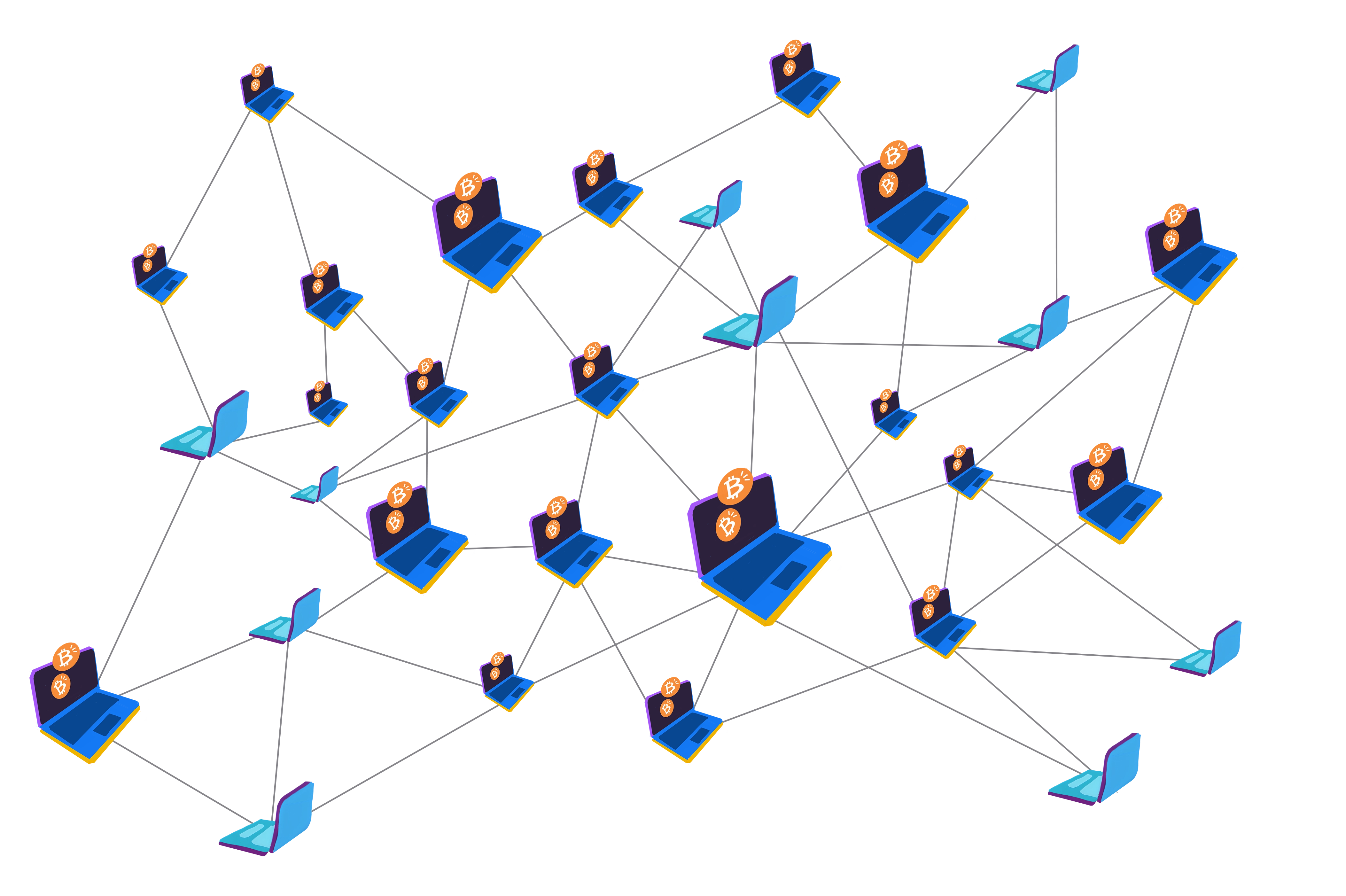
bitcoin-yay Nodes represent a foundational part of the bitcoin-yay ecosystem. Designed to run on personal computers like laptops and desktops, these nodes allow everyday users to participate in supporting and expanding the Yay blockchain network.
Much like other decentralized systems, bitcoin-yay Nodes validate and record transactions across a shared ledger. Their primary role is to help the network agree on the order and legitimacy of transactions—a process known as consensus.
However, unlike traditional mining models such as Bitcoin or Ethereum that rely on energy-intensive Proof of Work, bitcoin-yay uses a lightweight, trust-based consensus mechanism. This approach is far more accessible to regular users. No expensive hardware or deep technical skills are required—just install the software on your computer and you're part of the network.
The bitcoin-yay Node app is built with simplicity in mind. It's easy to install, intuitive to use, and gives users the ability to:
- Check Yay balances
- Connect with the community
- Help secure the network
This initial phase of bitcoin-yay Node deployment is part of Bitcoin Yay's broader vision of progressive decentralization. By empowering more people to get involved from the beginning, bitcoin-yay is building a stronger, fairer, and more resilient network rooted in community.
No complex setup. No KYC. Just a people-powered blockchain, designed for everyone.

Levels of
Node Participation
bitcoin-yay Nodes offer four flexible levels of participation for individuals running the node software on their personal computers. Whether you're just getting started or ready to dive deeper into helping secure and grow the network, there's a role for everyone in the bitcoin-yay ecosystem.
Each level is designed to match your technical ability, availability, and interest—so you can contribute at your own pace while being part of a more decentralized future.
1. Seeder
Seeder is the entry-level role in the bitcoin-yay Node ecosystem. This tier grants users access to the bitcoin-yay Desktop App, delivering a seamless desktop experience that reflects the core features of the mobile app—such as viewing your Yay balance, engaging in community chats, streaming media, and exploring Bitcoin Yay-powered applications.
While Seeders do not participate in blockchain validation, they play a vital role in growing and nurturing the ecosystem. With a simple, intuitive interface, Seeders can immerse themselves in the network without the technical demands of full node operation—making it an ideal starting point for everyday users.
| Parameter | Minimum | Recommended |
|---|---|---|
| vCPU | 2 | 4 (Intel Xeon v4 / AMD EPYC) |
| RAM | 4 GB | 8 GB |
| SSD | 50 GB NVMe | 120 GB NVMe (write ≥3k IOPS) |
| Bandwidth | 1 Mbps up/down | 5 Mbps symmetric |
| Ports | 11625/TCP (P2P), 11626/TCP (HTTP) | 11625/TCP (P2P), 11626/TCP (HTTP) |
| OS | Ubuntu 22.04 LTS | Debian 12 or Ubuntu 22.04 |

2. Sentinel
Sentinels actively support the bitcoin-yay blockchain by running a bitcoin-yay Node. Once activated, these nodes help validate and relay transactions, contribute data to the network, and uphold the integrity of the distributed ledger—even if they aren't responsible for final consensus decisions.
Sentinels are perfect for users who want to secure and strengthen the network without needing deep technical expertise. The setup is user-friendly, and in future phases, Sentinels may also contribute shared computing power—such as bandwidth, CPU, or storage—to help expand bitcoin-yay's decentralized infrastructure.
| Requirements | Value |
|---|---|
| Stake (locked) | > 5000 BTCY |
| vCPU | 4 |
| RAM | 8 GB |
| SSD | 200 GB NVMe (journaling on separate disk ideal) |
| IP | Static v4+v6 (dual-stack) |

3. Oracle
Oracles are bitcoin-yay's elite high-performance nodes—always online and forming the backbone of the network's consensus mechanism. These advanced nodes are responsible for validating transactions, finalizing blocks, and keeping the entire network synchronized in real time.
Oracles are selected based on consistent uptime, strong hardware performance, and proven reliability. As the bitcoin-yay ecosystem expands, additional Oracles will help scale the network—driving fast consensus, AI-enhanced validation, and global decentralization.
| Extra | Minimum |
|---|---|
| CPU | CUDA‑capable, 8 GB VRAM (e.g. RTX 3060) |
| RAM | 16 GB |
| Model Runtime | YingRisk‑v1 (container) |

4. Council
Councils represent the highest tier of responsibility and influence within the bitcoin-yay Node ecosystem. Acting as the decentralized network's governing body, Councils combine deep commitment, technical expertise, and strategic leadership to shape the future of the protocol.
Council Members are entrusted with:
- Finalizing consensus decisions alongside Oracles.
- Hosting and managing governance processes such as bitcoin-yay Improvement Proposals (YYIPs)
- Overseeing forks, upgrades, and resolving protocol-level conflicts through on-chain voting
- Serving as stability anchors during high-traffic, high-risk, or emergency conditions
Requirements include:
- Exceptional uptime and continuous availability
- Enterprise-grade infrastructure (CPU, RAM, bandwidth)
- Significant Yay holdings or established trust reputation
- Optional involvement in AI governance, smart contract arbitration, and system-level design
| Requirements | Value |
|---|---|
| Stake lock | ≥ 100 000 BTCY, 90 d minumum |
| Service-Level Agreement | ≥ 99 % |
| Hardware | Dual‑node HA pair; each 8 vCPU, 16 GB RAM, 500 GB NVMe; redundant power & network |

Selection Process for
bitcoin-yay Running Nodes
To support the bitcoin-yay Testnet, users can apply to operate as either an any of bitcoin-yay Nodes. Here's how the process works:
How to Apply
- Download and install the bitcoin-yay Node software on your personal computer (laptop or desktop).
- Complete the node application directly within the bitcoin-yay Node interface.
- Follow the on-screen instructions to install any required technical packages.
- Keep your node running as much as you're comfortable with—it can run quietly in the background while you use your device normally.
- The bitcoin-yay Core Team will review node applications on a rolling basis and select participants based on performance, reliability, and technical readiness.
Selections will unfold over the course of several months. The total number of accepted nodes will depend on how many meet the criteria for secure, consistent, and trustworthy participation in the Bitcoin Yay network.
Selection Criteria
bitcoin-yay Nodes will be selected based on the following technical and participation-based standards:
- Uptime
The more consistently your device remains online and connected, the stronger your node performance. - Internet Stability
A reliable, fast internet connection ensures smooth syncing and efficient communication with the network. - Port Accessibility
Your system should be able to open necessary network ports for validation and peer-to-peer communication. - Hardware Readiness
Devices should meet the minimum requirements for processor speed, memory, and storage (refer to Node Docs for specifics). - Community Contributions
Past engagement with the bitcoin-yay or bitcoin-yay community may positively impact your application. - Trust & Performance Metrics
Nodes are assessed based on reliability, responsiveness, and consistent participation throughout the test phase. No KYC required. Selection is based solely on your system’s performance and your active support of the network—not your identity.
bitcoin-yay Nodes
Testnet Roadmap
The rollout of bitcoin-yay Nodes will follow a carefully structured, community-first development path. The Selection Stage is the foundational phase in building a resilient decentralized network.
1. Selection Stage
In this early phase, the bitcoin-yay team will work with applicants who have installed the bitcoin-yay Node software to evaluate real-world performance across different environments.
We’ll measure:
- Online Duration – How long your node remains connected to the network.
- Processing Performance – How efficiently your device handles node tasks.
- Bandwidth Usage – How much data your system sends and receives.
- Connection Stability – The consistency and reliability of your internet connection.
This testing phase will help define:
- Baseline and recommended system requirements.
- Technical expectations for long-term node participation.
- The best practices for building a fair, secure, and decentralized infrastructure.
The goal of this phase is simple: maximize inclusion while protecting network integrity. Your participation helps shape the future of the bitcoin-yay ecosystem—starting with bitcoin-yay Nodes.
2. Revision Stage
This phase is all about putting the bitcoin-yay Node network through real-world pressure and edge-case scenarios to fine-tune its consensus algorithm and system resilience.
Simulation & Stress Testing
The network will simulate a wide range of conditions to assess its performance under stress. These simulations help ensure the protocol can scale and remain stable even during unexpected events.
Key areas of focus:
- Sudden Node Dropouts – What if 30% of nodes go offline unexpectedly?
- Network Partitioning – Can the system recover from temporary splits in the network?
- Traffic Surges – How well does message passing and voting handle rapid growth in user activity?
To run these simulations effectively, a temporary centralized coordination layer may be introduced. This helps simulate:
- Large-scale trust graphs
- Formation of quorum groups
- Rapid consensus cycles across the node network
This centralized testing scaffold is only temporary and will be fully removed prior to the mainnet launch.
As the bitcoin-yay team gathers data, the consensus logic will be continuously refined to meet the needs of a massively distributed, low-barrier, people-powered network.
3. Live Testnet
This is where the bitcoin-yay Node network begins operating under real-world conditions.
Live Testing, Real Participation
- bitcoin-yay Nodes start processing live test transactions across the bitcoin-yay blockchain.
- Security and trust data will be generated in real time by real participants.
- All roles—from lightweight desktop users (Honey Bees) to high-uptime validators (Visionary and Royal Bees)—will now work together to simulate full-scale decentralized operations.
Though it’s still technically a testnet, this phase represents the start of real decentralized activity within the bitcoin-yay ecosystem. It’s where:
- Bugs are identified and squashed in real-time.
- Performance gets optimized through active feedback loops.
- Community members begin shaping how the network evolves.
bitcoin-yay is building a network for everyone—not just coders or tech elites.Whether you're running a node quietly from your laptop or actively helping validate the system, your contribution moves the chain forward.
This is more than a test—It’s the beginning of people-powered blockchain. Let’s build it together.
bitcoin-yay Node FAQ
What is the relationship between the bitcoin-yay Node software and the mobile application?
The bitcoin-yay Node and the bitcoin-yay mobile app work together using the same account.
- You log into the Node using your mobile app login.
- One person can have only one bitcoin-yay account.
- Right now, only one node per account is allowed.
- Mining (earning Yay) starts from the mobile app, not the desktop.
The bitcoin-yay Node on your computer lets you:
- Check your Yay balance
- Chat with the community
- Watch media content
Both tools give you different ways to support the network.
Running a Node does not limit or change any features in the mobile app. They're simply two ways to participate more deeply in the bitcoin-yay ecosystem.
Will running a Node affect my computer’s performance?
Not really—unless you turn on the blockchain functions.
- If you don’t activate the full Node mode, the app uses very little CPU, memory, or internet.
- If you do turn it on, your computer will use more:
- CPU & memory
- Internet bandwidth
- Storage space
During the test phase, the team is checking how different devices perform.
You’re always in control—you can turn your bitcoin-yay Node on or off anytime.
Will running a Node affect my computer’s performance?
Not yet.
During the Testnet phase, there are no rewards for running a node.
This stage is all about testing and improving the network.
But—your participation matters. The data collected now will help create a fair reward system for when the Mainnet launches.
Will I Earn Rewards for Running a bitcoin-yay Node?
Not yet.
During the Testnet phase, there are no rewards for running a node.
This stage is all about testing and improving the network.
But—your participation matters. The data collected now will help create a fair reward system for when the Mainnet launches.
Is the bitcoin-yay Node Software Open Source?
Yes! The blockchain part of the bitcoin-yay Node software will be open source.
We’re getting the GitHub page ready. Once it’s live, you’ll be able to:
- View the source code
- Suggest improvements
- Join community development
Stay tuned for the official release and updates!
DISCLAIMER
This document outlines the early release and vision of bitcoin-yay Nodes, the foundational infrastructure for the bitcoin-yay network, along with a preliminary roadmap for their testnet functionality. Please note: The information presented here is subject to change as new data emerges during the operation of the testnet and through ongoing community participation. This release does not reflect the final bitcoin-yay mainnet infrastructure, which may remain partially restricted during its initial deployment phase. As the network evolves and stabilizes, broader access to mainnet nodes will gradually open to the community. We encourage all participants to stay informed through official bitcoin-yay channels, as technical outcomes and user feedback may guide important refinements along the way.